


Getting to the Heart of Cholesterol: Understanding Your LDL Goal

Updated: Oct 12, 2025
When people ask, “What should my cholesterol be?” they’re usually talking about LDL—the “bad” cholesterol that can build up inside artery walls and cause plaque, heart attacks, and strokes.
Lowering LDL clearly reduces risk, but it’s only one part of the bigger picture that includes blood pressure, diabetes, smoking, weight, fitness, sleep, inflammation, and family history.
Think of LDL as one of your most powerful levers for heart protection—but not the only one to pull.

Why Doctors Focus So Much on LDL
Research involving over 170,000 people shows that for every 40-point drop in LDL, the risk of major heart events falls by about 20–25%. And the lower it goes (safely), the greater the protection.
Recent studies confirm this:
• IMPROVE-IT trial: Adding ezetimibe to a statin after a heart attack lowered LDL to about 50 mg/dL and reduced future events.
• FOURIER / ODYSSEY trials: PCSK9 inhibitors lowered LDL into the 30s and further reduced heart attacks and strokes—without major safety issues.
• CLEAR Outcomes: For patients who can’t tolerate statins, bempedoic acid lowered LDL and improved outcomes.
So What’s a Good LDL Goal?
Different guidelines use slightly different terms—some talk about “thresholds,” others about “targets.” But they all agree on one thing: the lower, the better, when it’s safe and tolerated.
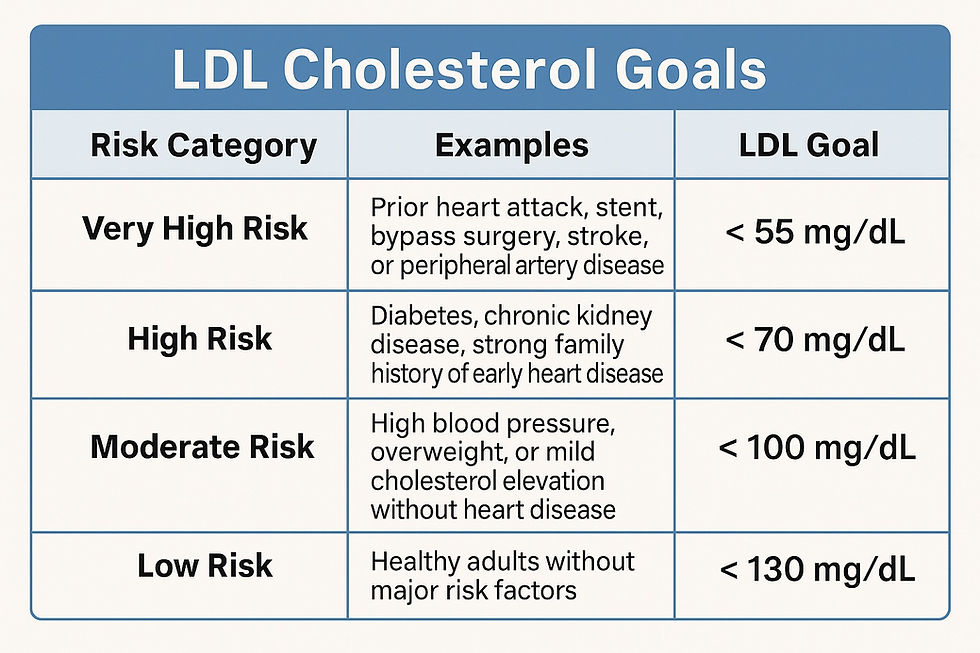
These are conversation starters, not strict rules. Your doctor may suggest a more tailored goal based on your calcium score, ApoB, or Lp(a) level.
How to Get There—Safely
1. Lifestyle first (and always)
• Eat more plants, fiber, and minimally processed foods.
• Limit butter, fatty red meats, and fried foods.
• Stay active most days (goal ≈ 150 minutes per week).
• Don’t smoke, and make time for good sleep and stress control.
2. Medications when needed
• Statins are the foundation of cholesterol management.
• If LDL stays above goal, your doctor may consider adding ezetimibe, and if still elevated, PCSK9 inhibitors.
• For patients who are statin-intolerant, bempedoic acid can help lower LDL and reduce risk.
3. Track your progress
Regular lab checks help ensure you’re reaching your goal safely. Even small LDL reductions over time can translate into meaningful long-term benefits.
LDL Is Important—But It’s Not Everything
Even with a perfect LDL, heart risk can remain high if other factors are off. Long-term protection comes from optimizing all key areas:
• Blood pressure control
• Weight and fitness
• Blood sugar and diabetes prevention
• Smoking cessation
• Quality sleep and stress management
• Addressing inflammation and inherited risks (such as Lp(a))
The Takeaway
• Lowering LDL lowers risk—clearly and consistently.
• Targets vary by your personal history and overall risk.
• The best heart-health plan combines lifestyle, appropriate medications, and attention to all risk factors.
If you’re unsure what your goal should be—or how to reach it—bring your most recent lab results to your next visit. Together, we’ll set a personalized LDL target and a step-by-step plan that fits your life.


Comments